
What is a profit & loss statement?
A plain-English look at one of the most useful reports in your business, what it is, what it's for, and how it's put together.
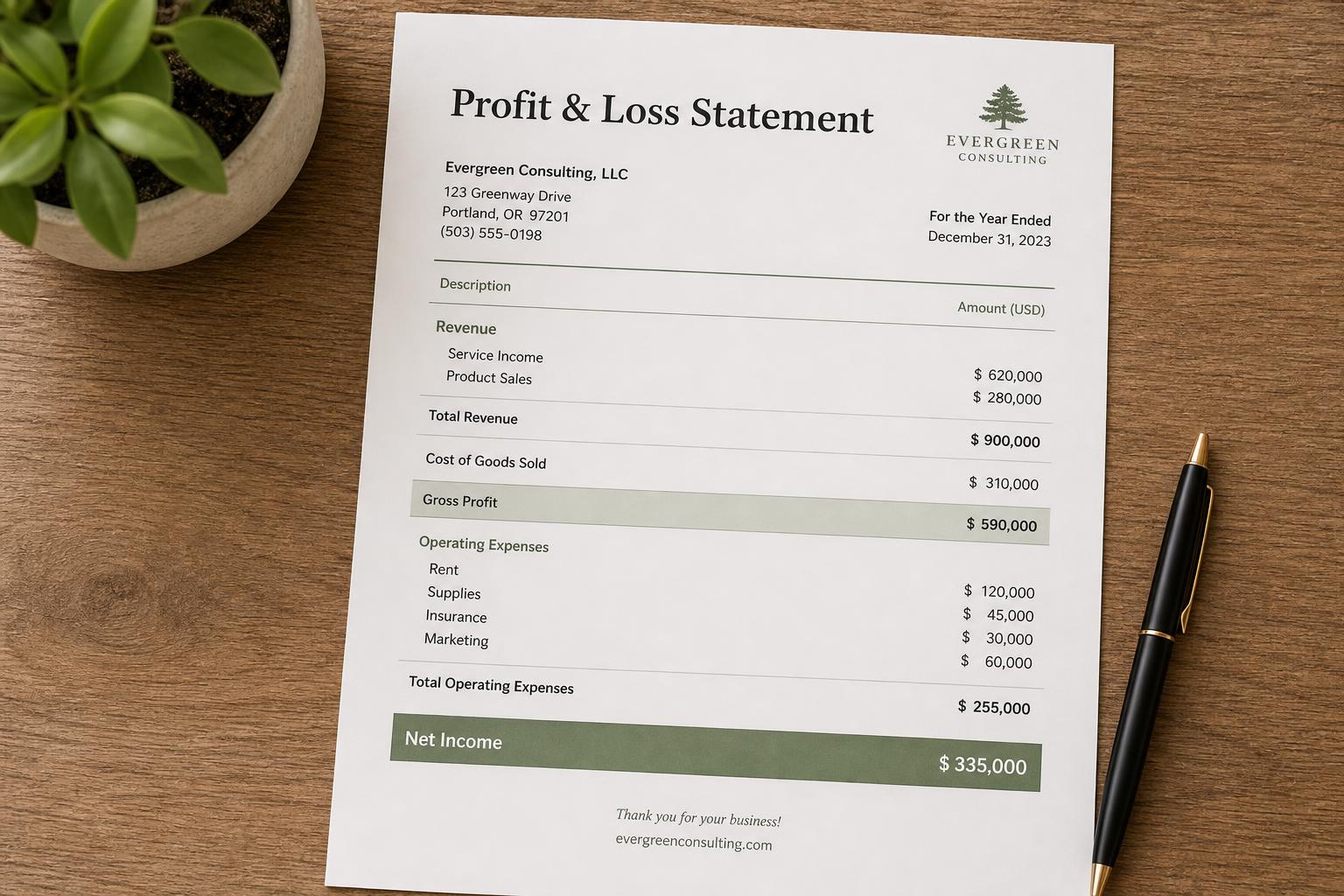
The short version
A profit and loss statement, usually shortened to "P&L," and sometimes called an income statement, is a one-page summary of what your business earned and what it spent over a period of time. Subtract the spending from the earning, and you've got your profit (or loss) for that period. That's really it.
What it's for
A P&L answers a question every business owner needs to be able to answer: am I actually making money? Your bank balance alone can be misleading, a fat account might just mean a big tax bill is coming, and a thin one doesn't necessarily mean the business is unhealthy. A P&L cuts through that by lining up income and expenses side by side.
In practice, people use P&Ls to:
- File accurate tax returns (your tax preparer will ask for one)
- Spot which services or products are actually profitable
- Catch expenses that have quietly crept up over time
- Apply for a loan, a lease, or a line of credit
- Decide whether you can afford to hire, raise rates, or take time off
How it's structured
Almost every P&L follows the same basic shape. You start at the top with money coming in, subtract costs as you go, and end at the bottom with what's left over, which is why people call net income the "bottom line."
- Revenue (Income)
All the money your business brought in from sales or services during the period.
- Cost of Goods Sold (COGS)
The direct costs of delivering what you sold, materials, wholesale product costs, or anything that only exists because you made a sale.
- Gross Profit
Revenue minus COGS. This is what you have left to cover the rest of running the business.
- Operating Expenses
The ongoing costs of being open, rent, software, insurance, marketing, professional fees, and so on.
- Net Income (the bottom line)
Gross profit minus operating expenses. A positive number is a profit; a negative number is a loss.
Bigger businesses add more layers, interest, depreciation, taxes, but the core idea is the same: revenue at the top, expenses subtracted in groups, profit at the bottom.
How often should you look at one?
At minimum, once a year for taxes. But a monthly or quarterly P&L is where the real value shows up, it turns "I think things are going okay" into actual numbers you can act on. Most bookkeeping software can generate one in a couple of clicks once your transactions are categorized.
Ready to build your own?
If you'd like a step-by-step walk-through with example categories for a wellness practice, head over to our companion article on how to create a profit & loss statement. And if you'd rather hand it off entirely, that's something we can help with too, get in touch.